Traveling with Your Pet: Tips for Safe and Stress-Free Trips
By KasPaws Team · August 22, 2026 · 4 min read
Traveling with your pet can be a rewarding experience, strengthening the bond between you and your furry companion. However, it requires careful planning to ensure both safety and comfort. Whether you're embarking on a road trip, flying to a new destination, or exploring the great outdoors, these tips will help make your journey enjoyable and stress-free.
Preparing Your Pet for Travel
Before setting out, it's essential to prepare your pet for the journey ahead. This preparation involves health checks, proper identification, and familiarizing your pet with travel conditions.
Health Check and Vaccinations
Schedule a visit to your veterinarian to ensure your pet is healthy and up-to-date on vaccinations. Obtain a health certificate if required, especially for air travel or crossing state lines. According to the Centers for Disease Control and Prevention (CDC), it's crucial to check regulations and required documentation for your destination before traveling. Source
Identification and Microchipping
Ensure your pet wears a collar with an ID tag containing your contact information. Microchipping provides an additional layer of security in case your pet gets lost. Keep your contact details updated in the microchip registry.
Acclimating to Travel Conditions
Help your pet become comfortable with travel by taking short trips in the car or spending time in their carrier. Gradually increase the duration to build their tolerance and reduce anxiety.
Traveling by Car
Car travel is a common mode of transportation for pets. Ensuring their safety and comfort during the journey is paramount.
Secure Restraints
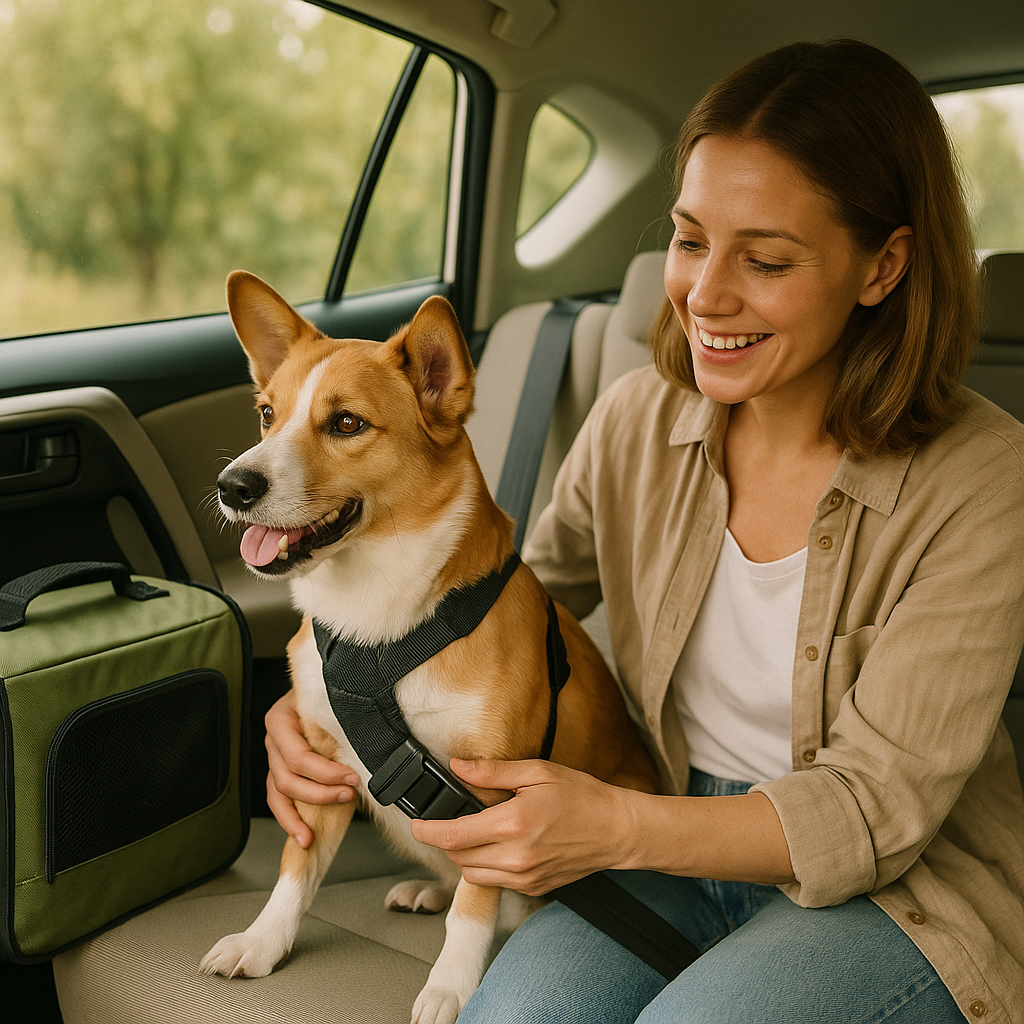
Unrestrained pets can be a distraction and are at risk during sudden stops. Use a crash-tested harness, pet seat belt, or secured crate to keep your pet safe. The American Veterinary Medical Association advises using a harness or crate secured to a seat belt system and placing pets in the back seat. Source
Comfort and Safety Measures
Temperature Control: Maintain a comfortable temperature in the car. Never leave your pet unattended in a parked vehicle, as temperatures can rise quickly, leading to heatstroke.
Regular Breaks: Plan for stops every 2-3 hours to allow your pet to stretch, relieve themselves, and stay hydrated.
Avoid Feeding Before Travel: Feed your pet 3-4 hours before departure to prevent motion sickness. Bring along their regular food and plenty of water for the trip.
Flying with Your Pet
Air travel with pets requires thorough preparation and understanding of airline policies.
Airline Policies and Reservations
Research and choose airlines that accommodate pets. Policies vary, so confirm whether your pet can travel in the cabin or must go in the cargo hold. Book direct flights when possible to minimize stress and the risk of separation.
Carrier Requirements
Use an airline-approved carrier that allows your pet to stand, sit, and turn around comfortably. Ensure it's well-ventilated and secure. Label the carrier with your contact information and a "Live Animal" sticker.
Health Documentation
Obtain a health certificate from your veterinarian dated within 10 days of your departure. For international travel, additional planning and healthcare requirements may be needed. Research the requirements for pets for your destination country as well as for the United States. Source
Avoid Sedation
Sedating pets for air travel is generally discouraged due to potential health risks. Instead, focus on acclimating your pet to the carrier and travel environment beforehand.
Staying in Pet-Friendly Accommodations
Finding suitable accommodations is crucial for a stress-free trip.
Research and Reservations
Use resources like BringFido and GoPetFriendly to identify pet-friendly hotels, motels, and rentals. Confirm pet policies, fees, and any restrictions before booking.
Comfort Items
Bring your pet's favorite bed, toys, and blankets to provide a sense of familiarity and comfort in new surroundings.
Maintain Routine
Stick to your pet's regular feeding and exercise schedule to reduce anxiety and help them adjust to the new environment.
Emergency Preparedness
Being prepared for emergencies ensures your pet's safety during unexpected situations.
Emergency Kit
Pack a kit that includes:
- Copies of medical records and vaccination certificates
- Extra food and water
- Medications and first-aid supplies
- A recent photo of your pet
- Contact information for local veterinarians and emergency clinics along your route
Lost Pet Plan
In case your pet gets lost, have a plan in place. Ensure your pet's microchip information is current, and carry recent photos to aid in identification. Familiarize yourself with local animal shelters and their contact information.
Conclusion
Traveling with your pet can be a delightful experience with proper planning and preparation. By considering your pet's health, safety, and comfort, you can ensure a journey that's enjoyable for both of you. Remember, every pet is unique, so tailor your travel plans to suit their individual needs.
Ready to find trusted local care for your pet? Explore sitters and boarders on KasPaws.
You might also like

Toxic Foods and Household Hazards for Pets
Learn about common foods and household items that can pose serious health risks to dogs and cats, and how to keep your pets safe.
4 min read
Late Summer Pet Care: Keeping Your Pet Safe and Comfortable
Ensure your pet's safety and comfort during late summer with essential tips on hydration, grooming, nutrition, and more.
3 min read
Senior Pet Care: Keeping Aging Dogs and Cats Healthy
Learn how to care for your aging dog or cat with practical tips on health, nutrition, and comfort to ensure their golden years are happy and healthy.
3 min read